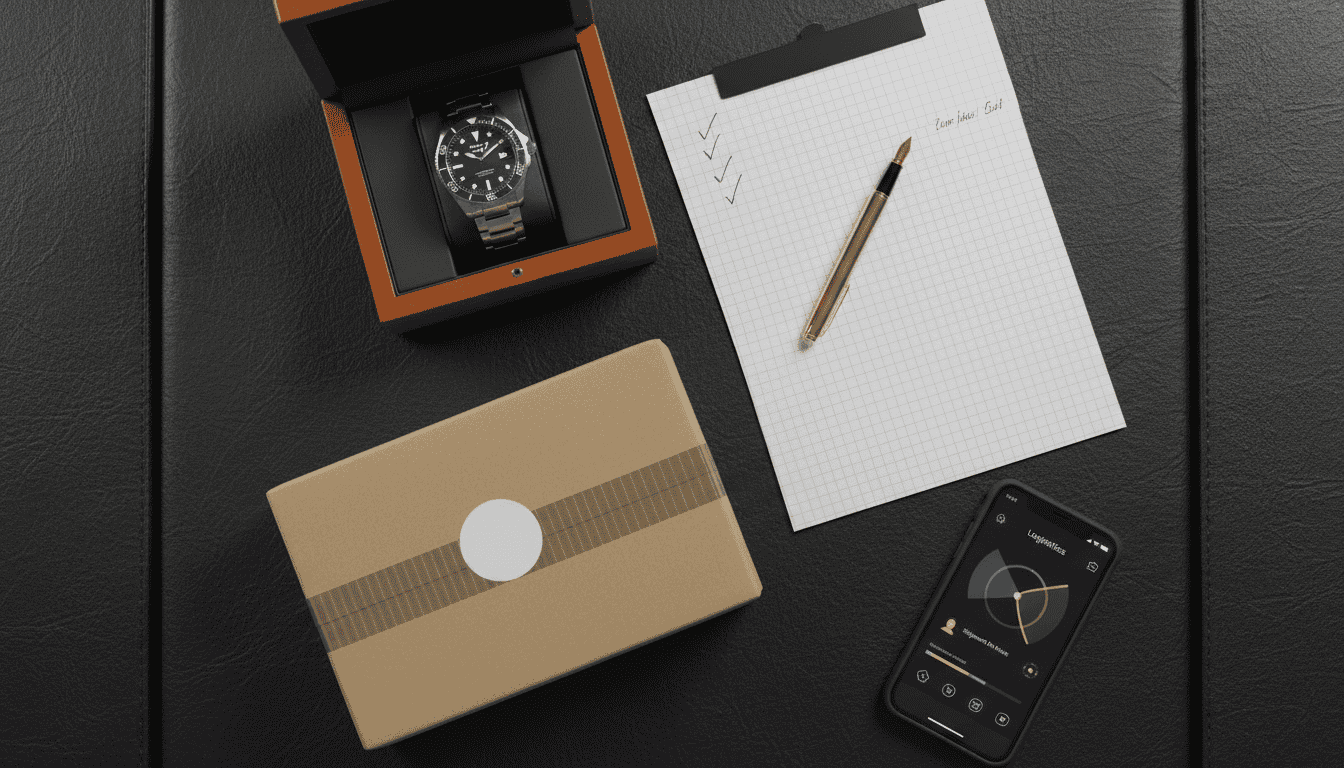
How Watch Dealers Ship High-Value Inventory (and What Can Go Wrong)


A mid-size Singapore watch dealer ships between 10 and 30 watches per month. Some go to local clients via same-day courier. Others go to Malaysia, Hong Kong, or further. Some are consignment placements, others are sold pieces, some are heading to exhibitions. Each shipment represents tens of thousands of dollars moving through a logistics chain that the dealer doesn't control. Most of these shipments are underinsured or uninsured during transit.
This guide covers how watch dealers actually ship inventory, what the common failure points are, and what marine cargo insurers expect from you in terms of packing, documentation, and risk management.
This guide covers:
- Common shipping methods for luxury watches
- What goes wrong and where losses occur
- Packing standards that insurers expect
- Documentation that protects your claim
- Cross-border complications for SG-MY shipments
Shipping high-value watches by courier without dedicated cover?
Courier liability caps don't come close to covering a luxury watch. MINT arranges marine cargo insurance under ICC(A) for dealers who ship regularly.
How Watch Dealers Ship: The Common Methods
There's no single standard for shipping luxury watches. Dealers use a mix of methods depending on value, urgency, destination, and client expectations.
| Method | Typical Use | Key Risks |
|---|---|---|
| International express courier (DHL, FedEx, UPS) | Cross-border shipments, SG to MY, SG to HK, etc. | Theft from hub/warehouse, customs seizure or delay, liability caps far below value |
| Local same-day courier | Domestic deliveries within Singapore or within a Malaysian city | Motorcycle couriers, minimal security protocols, low or no liability coverage |
| Specialist secure logistics (Brink's, Malca-Amit, Ferrari Group) | Very high-value shipments, exhibition logistics | Higher cost, still requires separate marine cargo insurance, their liability is contractually limited |
| Hand carry by staff | High-value local deliveries, exhibition setup | Robbery, loss, unclear insurance coverage during personal carry |
| Registered post / parcel services | Lower-value pieces, straps, parts | Minimal tracking, low compensation limits, long claims processes |
Every method involves trade-offs between cost, speed, security, and insurance compatibility. The cheapest option is rarely the safest, and even the most expensive secure logistics providers cap their own liability. Their professional services reduce the likelihood of loss, but they don't eliminate the need for your own insurance.
What Goes Wrong: Common Loss Scenarios
Understanding where losses actually occur helps you manage risk and prepare for claims conversations with underwriters.
| Scenario | Where It Happens | ICC(A) Coverage |
|---|---|---|
| Parcel stolen from courier sorting hub | In transit | Covered |
| Parcel "lost" and never located | In transit | Covered (non-delivery) |
| Watch crystal cracked from rough handling | In transit | Covered (assuming adequate packing) |
| Customs confiscates goods due to misdeclaration | At border | Not typically covered (legal/regulatory action) |
| Courier company becomes insolvent while holding your goods | In transit | Not covered (insolvency exclusion) |
| Watch damaged by water in flooded cargo hold | Sea transit | Covered |
| Watch movement damaged because shipped in padded envelope | In transit | Likely denied (insufficient packing) |
| Robbery from hand-carrying employee on the street | Local transit | Depends on policy terms regarding employee carry |
The packing scenario deserves emphasis. Underwriters won't second-guess every scuff or scratch, but if the packing was clearly insufficient for the value and fragility of the goods, the exclusion applies. For watch dealers, packing is a controllable risk, and getting it right is part of being insurable. For more on what can happen during hand deliveries, see our guide on protecting high-value hand deliveries.
Packing Standards That Insurers Expect
There's no single mandatory packing standard written into ICC(A). The exclusion refers to "insufficiency or unsuitability of packing or preparation of the subject-matter insured." Underwriters assess this on a case-by-case basis, asking: was the packing reasonable given the nature of the goods?
For luxury watches, reasonable packing typically means:
| Layer | Purpose | Practical Example |
|---|---|---|
| Inner protection | Prevent direct contact damage | Watch in its travel case, watch roll, or individual watch pouch |
| Cushioning | Absorb shocks during handling | Bubble wrap, foam inserts, or moulded packaging |
| Rigid outer box | Prevent crushing and compression | Sturdy cardboard or corrugated box, appropriately sized |
| Sealing and labelling | Tamper evidence and handling instructions | Security tape, "fragile" markings (though many dealers avoid marking high-value parcels to reduce theft risk) |
Some dealers deliberately use plain, unmarked outer packaging to avoid drawing attention to high-value contents. This is a legitimate security practice. The key insurability question is whether the physical protection was adequate, not whether the box looked expensive.
Documentation That Protects Your Claim
If something goes wrong during transit, your claim will depend on the documentation you can produce. Under the marine cargo policy conditions, the assured must submit supporting documents promptly.
Build these habits into every shipment:
- Pre-dispatch photos: Photograph the watch, the packing process, and the sealed outer package before handover to the courier
- Courier receipt: Keep the original receipt with tracking number, date, declared contents, and any condition notes
- Commercial invoice or valuation: Document the agreed value of the shipment for customs and insurance purposes
- Delivery confirmation: Record the condition of the parcel on arrival. If damaged, note this on the delivery receipt before signing
- Written notice to courier: If damage or loss is discovered, notify the courier in writing within 3 days of delivery
- Survey request: For significant claims, request a survey through the insurer's approved survey agents
The claims documentation requirements under a marine cargo policy typically include: the original policy or certificate of insurance, shipping invoices and packing lists, the bill of lading or courier receipt, a survey report documenting the extent of loss or damage, and correspondence with the courier regarding their liability. Missing any of these can delay or prejudice your claim. For general documentation best practices, see our guide on documenting your watch collection for insurance.
Shipping watches across the SG-MY corridor?
Cross-border shipments add customs complexity on top of transit risk. MINT works with dealers in both Singapore and Malaysia.
Cross-Border Complications: Singapore to Malaysia
The SG-MY corridor is one of the most common shipping routes for watch dealers in Southeast Asia. It's also where several complications converge.
| Issue | What Dealers Need to Know |
|---|---|
| Customs declaration | Luxury watches crossing borders require accurate customs declarations. Misdeclaring value or contents can lead to seizure, delays, and potential complications for insurance claims |
| GST/SST implications | Import duties and sales tax may apply depending on the purpose of the shipment (sale vs consignment vs temporary import for exhibition) |
| Different legal jurisdictions | Marine cargo policies are typically subject to English law and practice, which provides a consistent framework regardless of which country the goods are in |
| Courier network handoffs | Cross-border shipments often involve handoffs between courier networks at the border, creating additional handling and potential loss points |
The good news: ICC(A) coverage under a marine open cover works across borders without requiring separate policies for each jurisdiction. The warehouse-to-warehouse clause covers the entire journey from origin premises to destination premises, regardless of how many borders the goods cross. For more on Malaysian-specific dealer considerations, see our guide on jewellery business insurance in Malaysia.
FAQ
Should I use a specialist secure logistics company instead of a standard courier?
For very high-value shipments, specialist logistics companies offer better security protocols, purpose-built vehicles, and chain-of-custody procedures. But even they cap their contractual liability. Using a secure logistics provider reduces the likelihood of loss but doesn't replace the need for your own marine cargo insurance.
Can I hand-carry watches across the border and still be covered by marine cargo insurance?
This depends on the specific policy terms. Some marine cargo policies can be structured to cover goods carried by the assured's employees. Others only cover goods in the hands of third-party carriers. Discuss your shipping methods with your broker to ensure the policy covers how you actually move stock.
Do I need to declare the value of each shipment to the insurer?
Under a marine open cover, yes. You are bound to declare every consignment without exception, including the value. The premium is typically calculated as a rate applied to the declared value. Under-declaring or failing to declare can prejudice your coverage.
What if the courier damages the watch box but the watch itself is fine?
Marine cargo insurance covers loss of or damage to the insured goods. If only the outer packaging is damaged but the watch itself is undamaged, there may not be a valid claim. Presentation boxes that form part of the declared value may be treated differently. Check your policy terms.
How do I choose between couriers for insured shipments?
Your marine cargo policy may include requirements about approved carriers or shipping methods. Some underwriters impose conditions around the type of conveyance or courier used. At minimum, use couriers that provide tracking, proof of delivery, and tamper-evident sealing. Discuss any restrictions with your broker.
What should I do immediately if a shipment goes missing?
Claim on the courier immediately for the missing package. Notify your marine cargo insurer promptly. Gather all documentation: courier receipt, tracking records, commercial invoice, proof of value, and any correspondence with the courier. Request a survey if the insurer or their agents require one. Act quickly; delays in notification can prejudice your claim.
MINT Conclusion
Watch dealers move inventory constantly. It's how the business works: consignment placements, client deliveries, exhibition logistics, inter-branch transfers. Every movement is a moment of exposure. The watch is worth the same whether it's in your safe or in a courier van, but the protection often isn't.
Getting transit right means matching your insurance to how you actually ship: the methods, the values, the routes, and the frequency. Marine cargo insurance under ICC(A) is built for exactly this.
MINT provides specialist insurance for Singapore's luxury watch ecosystem, from Jeweller's Block coverage that protects dealer inventory to collector policies designed for how watches are actually owned and moved.
Get a quote for your watch business (SG) · Get a quote for your watch business (MY)
Disclaimer: This article provides general guidance on insurance coverage available in the Singapore and Malaysian markets as of March 2026. Policy terms, conditions, and availability vary by insurer. Always review your specific policy wording or consult a licensed broker before making coverage decisions.
Read other articles