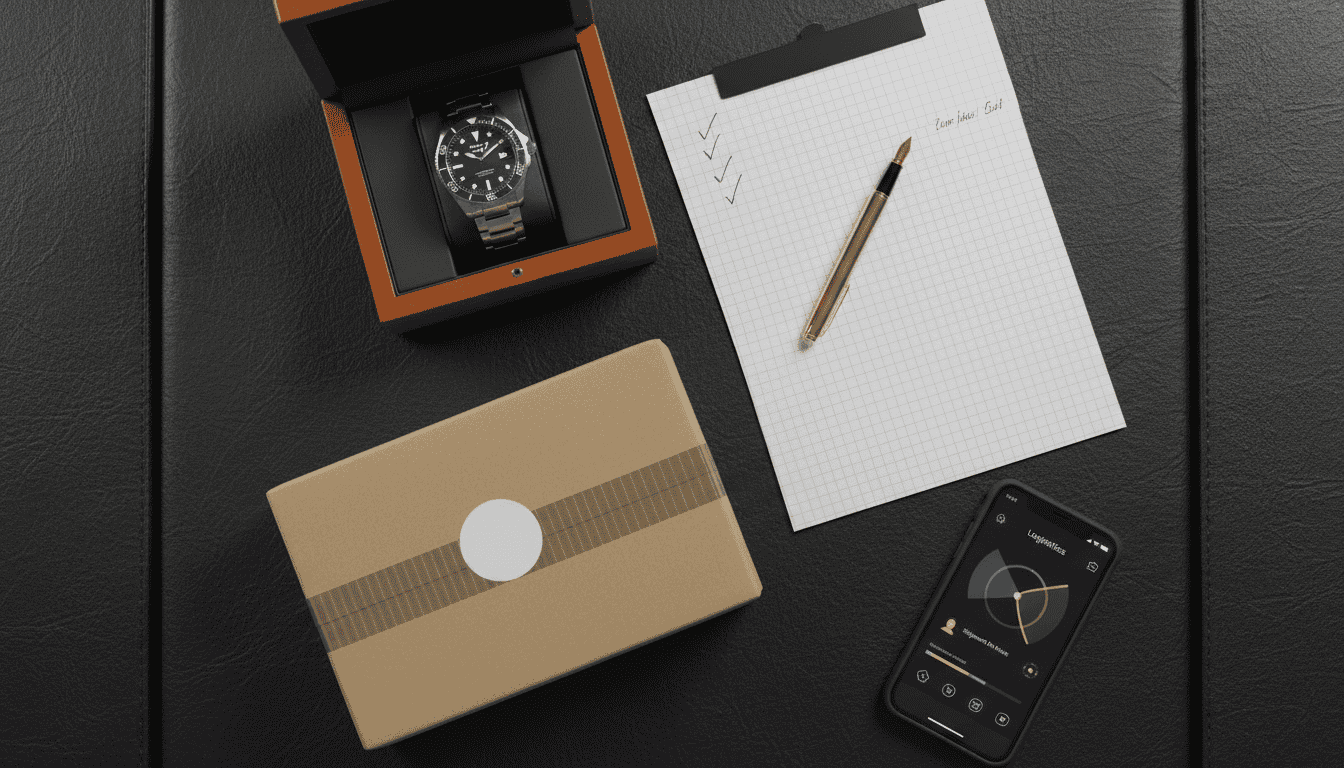
Customs, Couriers, and Claims: Moving Luxury Goods Between Singapore and Malaysia

The SG-MY corridor is short in distance but complex in practice. A watch leaving a Singapore showroom at 10am can reach a Kuala Lumpur partner by evening. But between those two points, the parcel crosses an international border, passes through customs in two countries, changes hands at least twice in the courier network, and enters a different legal jurisdiction. Every one of those steps creates risk. And for most dealers, every one of those steps is uninsured.
This guide covers the practical realities of moving luxury watches and jewellery between Singapore and Malaysia: the customs process, how to choose and work with couriers, what to do when something goes wrong, and how marine cargo insurance under ICC(A) applies to cross-border shipments.
This guide covers:
- Customs requirements for watches and jewellery crossing the SG-MY border
- How to select and manage couriers for high-value goods
- What to do when a shipment is lost, damaged, or delayed
- How ICC(A) works for cross-border shipments
- Common mistakes dealers make on the SG-MY route
Regularly shipping watches or jewellery between Singapore and Malaysia?
The SG-MY corridor is where transit gaps hit hardest. MINT arranges marine cargo cover for dealers operating across both markets.
Customs: What You Need to Know
Watches and jewellery crossing the Singapore-Malaysia border are subject to customs declarations on both sides. Getting this right matters for three reasons: it keeps your goods moving, it keeps you compliant, and it protects your insurance position (misdeclared goods can complicate claims).
| Issue | Singapore (Export) | Malaysia (Import) |
|---|---|---|
| Customs authority | Singapore Customs | Royal Malaysian Customs Department (JKDM) |
| Declaration required? | Yes, for commercial shipments via TradeNet | Yes, import declaration with accurate value |
| Import duty on watches | N/A (export) | Duty rates vary; check current JKDM tariff schedule |
| SST (Sales and Service Tax) | N/A (export) | SST applies on import value (currently 10% sales tax on goods) |
| Temporary import for exhibition | ATA Carnet or Temporary Export permit | ATA Carnet or Temporary Import permit (to avoid permanent duty) |
| Value declaration | Must match commercial invoice | Must match commercial invoice. Under-declaring is a customs offence |
The most common customs problem for dealers: under-declaring the value of the shipment to reduce duty. This creates two risks. First, it's a customs offence that can result in penalties, seizure, or blacklisting. Second, if you need to file an insurance claim, the declared customs value may be used as evidence of the shipment's worth, potentially limiting your claim recovery.
Consistency matters. The value you declare to customs, the value on your commercial invoice, and the value you declare to your marine cargo insurer should all align.
Choosing and Managing Couriers
Not all couriers are created equal for high-value goods. The courier you choose affects your risk exposure, your insurance position, and your claims outcome if something goes wrong.
| Factor | What to Look For | Why It Matters for Insurance |
|---|---|---|
| Tracking | Real-time tracking with scan points at pickup, customs, and delivery | Creates an evidence trail. If a parcel disappears between scan points, you can pinpoint where |
| Proof of delivery | Signature or photo confirmation on delivery | Proves the parcel arrived (or didn't). Essential for non-delivery claims |
| Value acceptance | Courier accepts shipments at declared values above their standard limit | Some couriers refuse shipments above a certain declared value. Others accept them but cap liability regardless |
| Customs handling | In-house customs clearance for both SG and MY | Reduces border delays and handling handoffs |
| Claims process | Clear claims procedure with documented timelines | Under the Duty of Assured, you must preserve rights against carriers. A responsive courier claims process helps |
Your marine cargo insurer may also have views on approved couriers or shipping methods. Some policies impose conditions around conveyance type. Check whether your policy has any courier-specific requirements before you ship. For more on how courier liability compares to marine cargo cover, see our guide on what happens when a watch gets lost in transit.
When Something Goes Wrong: The Claims Sequence
A loss on the SG-MY route involves two jurisdictions, a courier, and potentially an insurer. Knowing the sequence before something goes wrong saves time and protects your claim.
| Step | Action | Timeline |
|---|---|---|
| 1 | Claim on the courier immediately for missing or damaged goods. Get a written acknowledgment | Same day you become aware |
| 2 | If goods arrive damaged: note the damage on the delivery receipt before signing. Photograph everything | At delivery |
| 3 | If damage discovered later: give written notice to the courier | Within 3 days of delivery |
| 4 | Notify your marine cargo insurer promptly. Provide shipment details, tracking records, and description of loss | As soon as practicable |
| 5 | Request a survey if the insurer or their survey agents require one | Before disposing of or repairing damaged goods |
| 6 | Gather supporting documents: insurance certificate, commercial invoice, courier receipt/tracking, survey report, courier correspondence | As soon as available |
| 7 | Submit claim with all documentation to your insurer | Without delay |
The Duty of Assured clause requires you to take reasonable measures to minimise loss and preserve rights against the carrier. Failing to claim promptly on the courier, or signing a clean delivery receipt when the parcel is damaged, can prejudice your insurance claim. For more on documentation habits, see our guide on documenting your watch collection for insurance.
Need help understanding the claims process for cross-border shipments?
Marine cargo claims involve coordination between couriers, customs, and insurers across two jurisdictions. MINT can walk you through the process before you need it.
How ICC(A) Works for Cross-Border Shipments
Marine cargo insurance under ICC(A) is designed for international trade. The warehouse-to-warehouse clause doesn't care about borders: coverage attaches when goods leave the origin premises and terminates at the destination premises, regardless of how many countries the goods pass through.
For the SG-MY corridor specifically:
- Subject to English law and practice. This provides a consistent legal framework regardless of whether the goods are in Singapore or Malaysia at the time of loss. Both countries are common law jurisdictions with familiarity with English marine insurance principles
- Covers all conveyance types. Whether you use a courier, air freight, or road transport across the Causeway, the ICC(A) cover applies during the ordinary course of transit
- No separate policies per country. One open cover facility covers shipments in both directions: SG to MY and MY to SG. You declare each shipment under the same policy
- Customs delays don't automatically void cover. The transit clause remains in force during delay beyond the control of the assured. But the outer time limits still apply (60 days for sea, 30 days for air)
The practical benefit for SG-MY dealers: you don't need to arrange separate insurance each time you ship across the border. The open cover is always there. You declare, you ship, you're covered.
Common Mistakes on the SG-MY Route
| Mistake | Consequence | How to Avoid It |
|---|---|---|
| Under-declaring value to customs | Customs penalties. Insurance claim recovery may be limited to declared customs value | Declare the real value. Align customs, invoice, and insurance declarations |
| Assuming courier insurance is sufficient | Courier liability caps at ~S$100-500. A S$30,000 watch is 99% uninsured | Arrange standalone marine cargo insurance under ICC(A) |
| Forgetting to declare a shipment under the open cover | Undeclared shipments may not be covered | Build declaration into your shipping SOP. Declare before dispatch |
| Signing clean delivery receipt for damaged parcel | Harder to claim against courier. May prejudice insurance claim | Always inspect before signing. Note damage on receipt |
| Using personal carry across the border without declaring | Customs offence (undeclared goods). Insurance may not cover personal carry | Declare goods to customs. Confirm your policy covers employee hand-carry |
| Shipping consignment stock without clarifying insurance obligations | Neither party insures the transit. Loss falls on the stock owner | Specify transit insurance in your consignment agreement |
For more on the consignment angle, see our guide on consignment stock in transit. For more on the broader transit gap issue, see the transit gap for watch dealers.
FAQ
Do I need to pay import duty every time I ship watches into Malaysia?
For permanent imports (goods being sold or staying in Malaysia), import duties and SST typically apply. For temporary imports (exhibition stock returning to Singapore), an ATA Carnet or temporary import permit can exempt you from duty. Consult a customs broker for current rates and procedures specific to your goods.
Can I hand-carry watches across the Causeway?
You can, but you must declare the goods to customs on both sides. Undeclared commercial goods are a customs offence. Additionally, check whether your marine cargo policy covers goods carried personally by employees. Not all policies do.
What happens if customs seizes my goods?
Seizure by a lawful authority (customs) for reasons like misdeclaration or non-compliance is generally not covered under marine cargo insurance. The goods were not lost or damaged during transit; they were detained for a regulatory reason. This is another reason to get your customs declarations right.
Does the same marine cargo policy cover shipments in both directions?
Yes. A marine cargo open cover can be structured to cover shipments from SG to MY and from MY to SG under the same facility. Each shipment is declared separately, and the premium applies per declaration.
How long does a typical SG-MY courier shipment take?
Express couriers typically deliver between Singapore and Kuala Lumpur within 1-3 business days. Other Malaysian destinations may take longer. Customs clearance can add time, especially for high-value declared goods that may be selected for inspection.
What if the courier loses the parcel at the border?
File a claim with the courier immediately. Notify your marine cargo insurer promptly. The warehouse-to-warehouse clause covers goods during the entire transit, including while at customs or in the courier's border facility. Theft or loss at a border hub is covered under ICC(A).
Should I use the same courier for all my SG-MY shipments?
Not necessarily. Using a consistent courier builds a relationship and familiarity with your shipping patterns. But your priority should be choosing a courier that provides tracking, proof of delivery, customs handling capability, and a clear claims process for high-value goods. If one courier excels at all four, consolidating with them makes sense.
MINT Conclusion
The SG-MY corridor is where the watch and jewellery trade moves every day. Consignment placements, client deliveries, exhibition logistics, and inventory transfers all flow across the Causeway. Getting the customs right, choosing the right courier, and having proper transit insurance in place turns a routine shipment into a protected one.
Marine cargo insurance under ICC(A) covers the journey end-to-end, regardless of which side of the border the goods are on. One policy, both directions, all declared shipments.
MINT provides specialist insurance for Singapore's luxury watch ecosystem, from Jeweller's Block coverage that protects dealer inventory to collector policies designed for how watches are actually owned and moved.
Talk to us about transit coverage (SG) · Talk to us about transit coverage (MY)
Disclaimer: This article provides general guidance based on publicly available information and insurance coverage available in the Singapore and Malaysian markets as of March 2026. Customs regulations, duty rates, and policy terms vary and may change. Always verify current requirements with Singapore Customs, JKDM, or a licensed broker before making decisions.
Read other articles