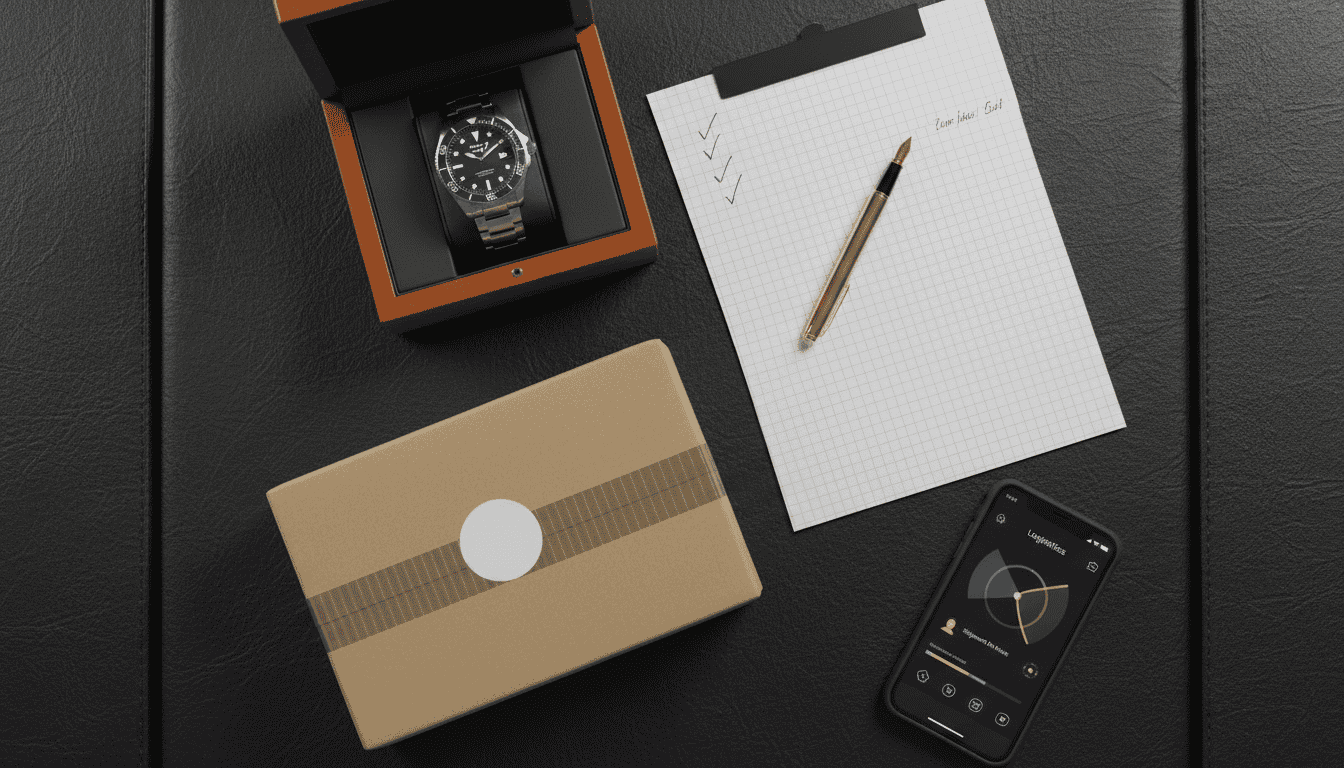
Watch Delivery to Customers 2026: How to Protect High-Value Hand Deliveries


A customer calls. They've bought a Patek Philippe and want it delivered to their office rather than coming to your shop. Easy enough, right?
Personal delivery of high-value watches is one of the highest-risk activities in the dealer business. Most dealers don't realise how many ways coverage can fail during transit, or how specific the rules are about what you can and can't do. This guide covers everything from preparation to handover, including the common mistakes that leave dealers unprotected when things go wrong.What this article covers:
- Personal conveyance rules and requirements
- Documentation before leaving your premises
- Vehicle security during transit
- What NOT to do (the gaps that catch dealers out)
- Handover procedures and confirmation
- Coverage considerations for transit
Personal Conveyance: The Basic Rules
"Personal conveyance" means carrying goods yourself (or your employee) rather than using a courier or postal service. For high-value watches, personal delivery is often the only covered option.
The Core Requirement: Close Personal Control
Most stock protection requires goods in transit to be kept within "close personal custody and control." This typically means:
| Requirement | What It Means |
|---|---|
| Within arm's reach | You can touch the bag/case at all times |
| Within sight | You can see the bag/case at all times |
| Under your control | You decide where it goes, no handoffs |
Who Can Make Deliveries?
Check your coverage terms. Common requirements:
| Person | Typically Allowed? |
|---|---|
| Business owner | Yes |
| Full-time employee | Usually yes |
| Part-time employee | Check terms |
| Family member | Usually no |
| Contracted driver | Usually no |
| Courier service | Usually no |
Preparation Before Leaving
Proper preparation protects both the merchandise and your coverage.
Documentation Checklist
Before any delivery, complete:
| Document | Purpose |
|---|---|
| Delivery record | Internal tracking |
| Item details | Brand, model, reference, serial |
| Customer details | Name, delivery address, contact |
| Agreed value | For your records |
| Photos of item | Condition at departure |
| Departure time | Timestamped record |
| Expected delivery time | For tracking |
Packaging
The watch should be:
- In its original box if being delivered with box
- In a protective case or pouch if watch only
- Inside an inconspicuous outer bag (not branded)
- Secured against movement and impact
Route Planning
Plan your route in advance:
- Direct route, minimal stops
- Avoid high-risk areas
- Park in secure, well-lit locations
- Know backup routes for traffic
Vehicle Security During Transit
Your vehicle is the most vulnerable point in the delivery chain. This is where most losses occur.
The Unattended Vehicle Problem
Most stock protection excludes losses from unattended vehicles. The standard language requires that goods in vehicles either:1. Be attended at all times by someone in or immediately adjacent to the vehicle, OR 2. Be removed from the vehicle when you leave it
| Scenario | Covered? |
|---|---|
| Watch in car, you're driving | Yes |
| Watch in car, passenger with it, you pump petrol | Usually yes |
| Watch locked in boot, you're in coffee shop | Usually NO |
| Watch in your bag, you take bag into meeting | Yes |
Practical Vehicle Rules
| Rule | Why |
|---|---|
| Never leave goods in parked car | Unattended vehicle exclusion |
| Take the bag with you everywhere | Maintains close personal control |
| Use inconspicuous bags | Reduces targeting |
| Park in secure areas | Reduces break-in risk |
| Lock all doors while driving | Prevents opportunity theft |
| Avoid predictable routines | Prevents targeting patterns |
If You Must Leave the Vehicle Briefly
Sometimes you genuinely can't take items with you (building security won't allow bags, for example).
Options: 1. Have a second person stay with the vehicle and goods 2. Use a secure drop point (bank safe deposit, for example) 3. Reschedule the delivery
There is no option that involves leaving goods in an unattended vehicle and maintaining coverage.
What NOT to Do: Common Coverage Gaps
These are the mistakes that catch dealers out.
1. Leaving Watches in the Car While You Eat
You've driven 45 minutes to deliver a watch. The customer wants to meet for lunch first. The watch is locked in your boot.
Problem: That's an unattended vehicle. If someone breaks in during lunch, you're likely not covered. Solution: Take the bag into the restaurant. Keep it on your person or within arm's reach throughout the meal.2. Hotel Overnight Stays
You're delivering to an out-of-town customer and staying overnight.
Problem: Watches left in hotel room safes may not be covered. Hotel safes have value limits and may not meet your coverage requirements. Solution: Check your policy for overnight requirements. You may need to use a bank safe deposit or the hotel's main vault (not room safe) with specific documentation.3. Handing to a "Representative"
You arrive and the customer isn't there. Their assistant offers to accept delivery.
Problem: Your sale is with the customer. Their employee taking receipt may create documentation issues, especially if there's later a dispute about condition or delivery. Solution: Deliver only to the named purchaser unless you have written authorisation to deliver to a specified alternate. Get ID, signature, and photos at handover regardless of who receives.4. Multiple Deliveries on One Trip
You're efficient and schedule three deliveries in one run.
Problem: More stops mean more risk exposure. Each stop is a potential issue point. Solution: If making multiple deliveries, be extra rigorous. Never leave any items unattended. Plan route to minimise stops between deliveries.5. Public Transport Delivery
You don't drive. Can you deliver via MRT or bus?
Problem: Not usually covered. Most transit coverage requires a motor vehicle under your control. Solution: Check your specific terms. Some policies may allow it; most don't for high-value goods. Consider taxi/private hire with you accompanying (you're still in control of the goods).Handover Procedures
The delivery isn't complete until you have proper confirmation.
At Delivery
| Step | Action |
|---|---|
| 1 | Verify recipient identity (IC/NRIC) |
| 2 | Note delivery time |
| 3 | Customer inspects item |
| 4 | Customer signs delivery confirmation |
| 5 | Take photo of signed confirmation |
| 6 | Issue receipt if payment collected |
Delivery Confirmation Form
Your confirmation should include:
- Date and time of delivery
- Delivery address
- Customer name and IC number
- Description of item(s) delivered
- Condition notes (any observations)
- Customer signature confirming receipt
- Your signature as deliverer
Payment at Delivery
If collecting payment at delivery:
- Verify funds before handing over goods
- Bank transfer: confirm funds received in your account
- Cash: count carefully, check for counterfeits
- Cheque: don't hand over until cheque clears (or accept the payment risk)
Return Trip Security
The delivery is done, but your trip isn't over.
After Successful Delivery
- Confirm completion to your shop
- Store signed documents securely
- If carrying payment (cash), treat return with same security as delivery
- Don't discuss the completed delivery publicly
If Delivery Fails
Customer isn't home, changes mind, or something else prevents handover:
- Return goods to your premises immediately
- Don't store in vehicle overnight
- Document the attempted delivery
- Reschedule with customer
Coverage Considerations for Transit
Understanding what your coverage requires helps you stay compliant.
Typical Transit Coverage Requirements
| Requirement | Common Standard |
|---|---|
| Personal conveyance by | Owner or named employees |
| Goods must be | Within arm's reach at all times |
| Vehicle must be | Attended when goods inside |
| Overnight | Special requirements apply |
| Documentation | Delivery records maintained |
Common Exclusions
| Exclusion | What It Means |
|---|---|
| Unattended vehicle | No cover if goods left in unattended car |
| Courier/post | No cover for third-party carriers |
| Public transport | Often excluded or limited |
| Outside business hours | May have limitations |
Value Limits
Some policies have transit value limits, such as:
- Maximum per item during transit
- Maximum total value per trip
- Different limits for different transport methods
FAQ
Can I use a hired driver for deliveries?
Check your policy. Most require employees or named individuals. A hired driver (Grab, taxi) may not qualify as "personal conveyance" since you're not in control of the vehicle. However, you travelling in a taxi while holding the goods is different from a driver transporting goods alone.
What if I need to use the bathroom during a delivery trip?
Take the bag with you. Yes, into the bathroom. This is the practical reality of maintaining "close personal control." The alternative is being unprotected.
Are deliveries to hotels covered?
Usually yes, if you maintain personal control throughout. The delivery itself is like any other. It's overnight storage in hotels that often has special requirements.
Can my spouse make deliveries?
Only if they're a named employee or specifically authorised in your coverage terms. "Family helping out" typically doesn't qualify for coverage.
What about collecting watches from customers?
The same rules apply in reverse. When collecting a watch for repair or trade-in, maintain personal control during transit back to your premises.
Do I need special coverage for transit?
Most dealer stock protection includes some transit coverage, but limits and conditions vary. For high-value or frequent deliveries, verify your limits are adequate.
What if someone attempts to rob me during delivery?
Comply with demands for your safety. No watch is worth your life. Report immediately to police. Document everything. This is a covered event under most policies, assuming you were otherwise compliant with terms.
Should I vary my delivery routes?
Yes. Predictable patterns make you easier to target. Vary timing and routes where practical.
MINT Conclusion
Personal delivery is often necessary for high-value sales, but it's also when your stock is most vulnerable.
The dealers who avoid problems are those who understand the rules, never cut corners on "quick stops," and maintain proper documentation throughout.
MINT provides specialised stock protection for watch dealers and jewellers in Singapore and Malaysia, including transit coverage for personal conveyance with clear, understandable terms.
Speak with MINT about dealer coverageRead other articles