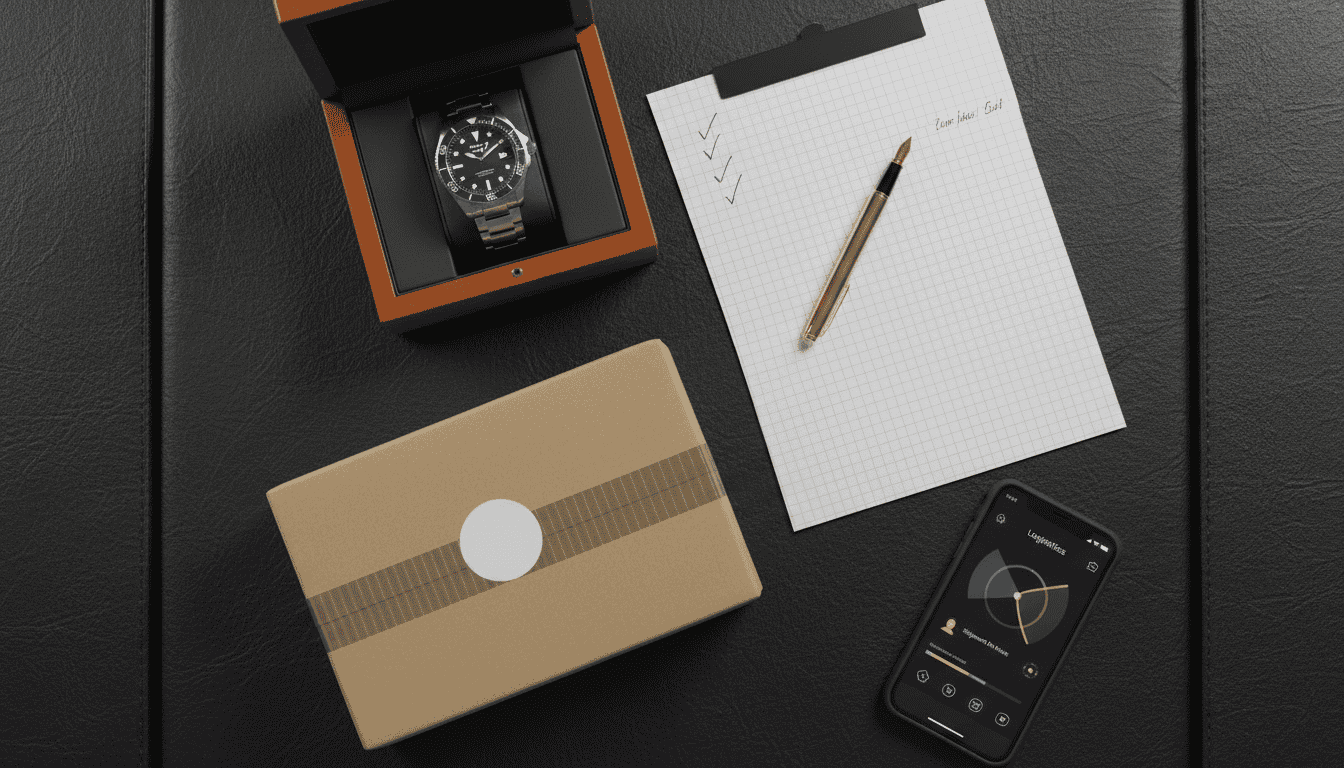
Singapore's Smallest Watch Dealer: Inside Wearable Treasure With Sam


He calls himself Singapore's smallest watch dealer. He means it. One shop, one staff member, and a CRM system that tracks every customer's spending to the dollar.
This is the story of Wearable Treasure, told by the person who built it from a home-based side hustle into a proper retail operation: Sam.
From Banking to Watches
Sam spent over a decade in banking. Stable career, structured environment. But the watches came first.
"Even in my uni days, I was already interested in watches," he says. "I've been collecting watches. I didn't have a lot of money to go Rolex, the expensive ones. So I started collecting the cheaper pieces."
He wasn't just collecting. He was tinkering. A scratch on a watch he couldn't live with became the start of something else entirely. "I was a little bit OCD. It started with a scratch. I couldn't take it, so I wanted to handle the scratch."
The learning was expensive. "There's a price to pay when you want to learn yourself. I spoil things. Then I'll just sell them off half price since I already spoilt it." If he couldn't fix it, he'd sell at a loss and move on. If he could fix it, the watch became something new. Either way, the tool collection grew.
"If I need one tool today to do something, I need to buy it. So inventory just gets bigger and bigger. It literally becomes a point where you need to have everything, because you cannot just have one."
The COVID Calculation
During COVID, Sam was 38. He started thinking about career progression and what he actually wanted.
"I thought, if I continue, it becomes 45 very soon. And then I most probably become that middle-aged guy who is unemployable," he says. "If I decide to do something and I fail, I'm still 41 and I can go back to the workforce. If I make it, then I won't be thinking about being an employee anymore."
So he started. Home-based. No shop, no fanfare, no announcement.
"I didn't say, I just do. There's no announcement. You want to start, you just do. Who do you want to consult? A consultant who has never been in the business? Or another competitor? There's no one to consult."
First month, he made S$1,000. Second month, S$2,000. Then S$3,000. He set himself a target: if he could cover his expenses within 12 months, he'd keep going. He did the maths, saw the trend, and committed.
"After 12 months, I looked again. No turning back already."
McDonald's, Car Parks, and Dark Places
Before the shop, Sam was meeting buyers and sellers wherever he could. McDonald's. HDB void decks. Car parks. "Literally any time of the day, any place. You can think of anywhere," he says.
The home-based model had real limitations. You can grow fast and work at your own pace, but you don't have the visibility of a shopfront. And when you're handling high-value items, people are reluctant to come to your house.
"When you are handling high-value items and some services, people may not want to come to your house to give you that watch," Sam says. The physical shop changed everything. "If it's the same brand, me running from home versus me having a shop, maybe 50% of people may not even want to look because it's home-based."
A shop gets you past that first trust hurdle. After that, as Sam puts it: "It's showtime. People now want to step in. You got a chance."
Small, But Structured
This is where Sam's banking background shows up in ways you wouldn't expect from a one-man watch dealership.
He runs a POS and CRM system that tracks every customer's transactions to the dollar. He knows who his biggest spender is. He knows who generates the most revenue. He knows the difference between the customer who visits weekly and spends S$1,000 a year, and the one who walks in once and drops S$50,000.
"Small, but structured," he says. "Small, but process-driven."
Everything from invoicing to buying to selling follows a documented procedure. His staff doesn't need to memorise anything. "I don't need you to remember. I just need you to follow procedures," Sam tells his employee. "If you have something you don't know, don't ask me. Go and find the procedure."
When something goes wrong, the diagnostic is simple. "If it goes wrong, it's either the human go wrong or the process go wrong. If the human cannot go wrong, then check the process." It's corporate thinking applied to a tiny operation, and it works.
Buying, Selling, and Showing You Why
Buying and selling is the core of Wearable Treasure. Repairs, servicing, and polishing are complementary services, not the main revenue driver.
Sam's approach to buying is distinctive. The first thing he does when someone brings in a watch is authenticate it. Not quietly in the back room, but transparently, in front of the customer. He walks them through what he's checking and why.
"With my way of presentation, it draws a specific crowd of people," he says. "But it also means I spend double the time compared to other dealers. If you want to be transparent, you spend time doing that thing. When you do that thing, you're going to talk a lot. A transaction other dealers do in 10 minutes, I need half an hour, one hour."
He's not planning to change the formula. "That was how it worked when I started from home. Nobody's going to trust you. How to make someone trust you? Show them." Show them the watch is authentic and you'll pay fairly. Show them when there's a problem and explain why the price is lower. Let them take photos for comparison.
"Hopefully the next time they'll come back to you."
The One-Hour Rule
Sam does in-house polishing with a turnaround that surprises most people: one to two hours, and you can collect the same day. He's probably the only dealer in Singapore offering that speed.
His gauge for taking on any repair or service job is simple: can he finish it within one hour? If yes, he takes it. If not, he outsources to a specialist.
The trade-off is transparent. Other shops charge S$140 and deliver 100% results. Sam offers a faster turnaround at S$80 to S$120, aiming for what he calls 90% of the result, which to a normal person looks like 95%. "Some people will choose that. It's now for the customer to give and take."
The honesty extends to repairs he can't handle. "The most difficult part is to try and do it yourself. And then when you cannot solve it after three days, five days, ten days, it's time to get professional help." He's clear-eyed about his limits and doesn't pretend otherwise.
What Scares Him Most
We asked Sam what would be the hardest thing to deal with if something went wrong tomorrow. His answer wasn't what we expected.
It's not losing inventory. He's covered by insurance for that. "Losing inventory, I claim the insurance, then I go through the process. There's a flow."
What scares him is buying something that isn't authentic and reselling it before catching the mistake.
"Now you got to go and find the person you bought it from. Tell them you want your money back. And you got to call the person you sold it to and say, your item I sold you is not authentic," he says. "That one is more scary than me losing something. Me losing something is me and insurance. That one is me versus customer."
The reputational damage is what keeps him up at night. "If the customer knows they've been sold a fake product, how can they trust you again? Then who will they tell? Social media? You don't know what the reaction will be."
His policy is zero tolerance. "Between me and my staff, I always say: zero tolerance for fake. I can see fake, but I cannot pay for fake. I will not pay. If I make a misjudgement, I pay for it. It has to stop there. It cannot be I resell it already."
Beyond the Four Walls
Sam is candid about what running a small business actually costs you outside the shop.
"When anyone decides to start their own business, you've got to be prepared," he says. "What time do you want to wake up? What time do you want to sleep? Do you have time for anything else? How does your family revolve around it? Who is supporting you?"
Customers message him at 2am. His phone line is public, and he can't control when people reach out. That creates friction at home too. "The phone rings, even if I don't get surprised, your partner will be surprised that somebody is texting you at 2am."
Work-life balance, in his view, only exists when you have a fixed format to follow. "When my business don't have a fixed format, when I'm running my own show, although I have employees, you cannot just don't care."
"It's not what you see in the influencer," he says. "People say, how hard to run a business, what we put our sweat into. So what? There are things that surround the business outside of the four walls."
Navigating 2026
This interview came at a particular moment. Sam told us candidly that in four years of running Wearable Treasure, this is one of the first times he's saying publicly that conditions are difficult.
"Because of the current macro and political situation, the first one to feel the impact is the luxury goods sector," he says. "We really need to navigate 2026 carefully."
The dynamics are confusing. Watch prices are stable, some even rising. But Sam already has customers coming in to sell watches because they've lost money in the stock market. "It's a very awkward situation. It's a bit confusing these 10, 15 days."
The watch trade is both a leading and lagging indicator. "We are lagged when people make money. They won't immediately come and buy from us. Then there are people who still haven't realised the full impact of the current situation, still have a little bit of money, and they give you a false impression that there's still money to make."
What He's Proud Of
We asked Sam what he's most proud of about Wearable Treasure today. His answer was two words: "Surviving. Word of mouth."
No big marketing budget. No influencer campaigns. Just four years of consistent work, transparent dealings, and customers who keep coming back and telling others. For a business that started in McDonald's car parks, that's something.
Quick Answers From Sam
Best watch under S$5,000?
"I seldom answer this kind of question. What is nice and of value to me is not nice and of value to you. Understanding the customer is the most important thing, not what I think is the best."
Most underrated watch brand right now?
"Jaeger-LeCoultre. They were born watchmakers, making complicated, fine handpieces. But the marketing effort is really not achieving whatever standards. The most famous one is the Reverso."
Most overrated?
"AP."
Advice for someone starting a watch collection?
"Go buy the genre of watches you like first. Choose a genre, like dress watches. Then find that price you can start with. It could be a S$1,000 Seiko or a S$30,000 Patek. Find the genre first, then find the entry point."
Dream watch?
"Patek Philippe 5712."
What would you tell someone wanting to start a watch business?
"Think about everything beyond the four walls. Your time, your energy, your family. Do you have a supporter who is 100% supportive, no questions asked? What is your cut-loss point? Where do you stop? A lot of people do the maths to start but never count the exit."
MINT Conclusion
Sam's story is a reminder that the watch trade in Singapore isn't just the big names and the flashy showrooms. It's also the small operators who built their businesses from nothing, who meet customers at McDonald's before they can afford a shopfront, and who treat every transaction like their reputation depends on it, because it does.
Whether you're a one-man operation like Wearable Treasure or a multi-outlet dealer, the risks are the same: inventory exposure, authentication liability, and the trust that takes years to build and seconds to lose. Having the right protection in place isn't a luxury. It's what lets you keep going.
MINT provides specialist insurance for Singapore's luxury watch ecosystem, from Jeweller's Block coverage that protects dealer inventory to collector policies designed for how watches are actually owned and moved.
Find out how MINT protects watch businesses
Visit Wearable Treasure on Facebook at Wearable Treasure.
This article is based on a conversation between MINT and Wearable Treasure conducted in March 2026. Business details and availability may change. Contact Wearable Treasure directly for current information.
Read other articles