Consignment Risk for Watch and Jewellery Dealers in Malaysia: Liability and Insurance Guide

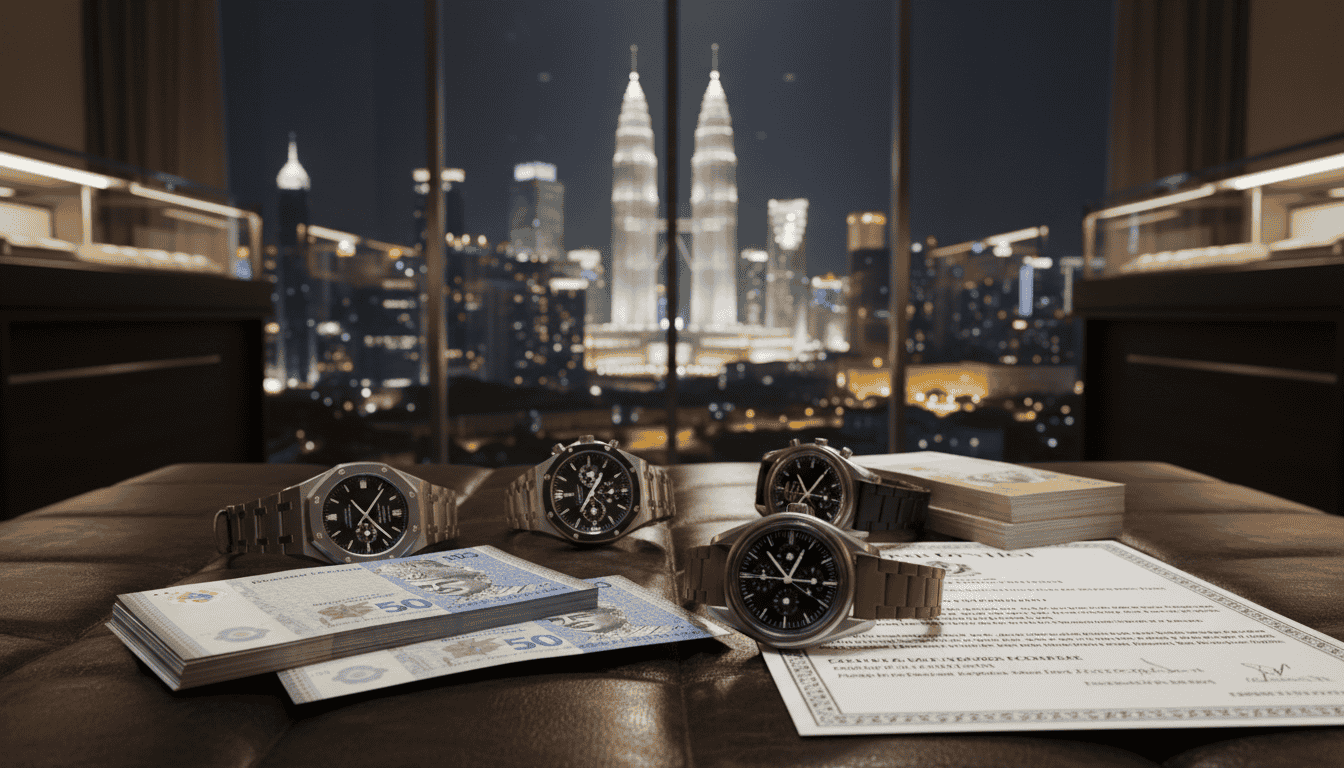
A collector drops off their RM85,000 Audemars Piguet Royal Oak for you to sell on consignment. Two months later, your Bangsar showroom is broken into. The watch is stolen. Under Malaysia's Contracts Act 1950, you're the bailee — and that means specific statutory obligations. This guide explains how Malaysian law treats consignment liability and why standard insurance leaves you exposed.
Holding consignment stock without proper coverage?
MINT arranges Jeweller's Block insurance that covers barang amanah (goods held in trust), protecting you when consigned watches or jewellery are lost, stolen, or damaged in your care.
Understanding Consignment Under Malaysian Law
Unlike many countries where bailment relies on common law precedent, Malaysia has a codified statutory framework — Part IX of the Contracts Act 1950 (Sections 101-134) specifically governs bailment relationships.
This matters because your liability as a consignee (bailee) isn't just based on general "reasonableness" — it's defined by specific statutory provisions.
Key Definitions (Section 101)
- Bailment: Delivery of goods by one person to another for some purpose
- Bailor: The person delivering the goods (the consignor/owner)
- Bailee: The person receiving the goods (you, the dealer)
When you accept a watch or jewellery piece on consignment, you become a bailee with statutory duties.
Your Statutory Duties Under the Contracts Act 1950
Section 104: Duty of Care
The bailee is bound to take as much care of the goods bailed to him as a man of ordinary prudence would take of his own goods of the same bulk, quality, and value.
What this means: You must treat consigned goods with the same care you'd give your own RM100,000 inventory. Leaving a consigned Patek Philippe on an unsecured counter doesn't meet this standard.
Section 105: When You're NOT Liable
The bailee is not responsible for loss, destruction, or deterioration of the goods if he has taken the required care AND the loss occurs without any negligence or default on his part.
The burden: You must prove both (1) you took proper care AND (2) the loss wasn't due to your negligence. If you can't prove both, you're liable.
Section 106: Termination for Inconsistent Acts
A contract of bailment is voidable at the option of the bailor if the bailee does any act with regard to the goods bailed inconsistent with the conditions of the bailment.
What this means: If you sell a consigned piece below the agreed minimum price without permission, or use it as collateral, the bailor can treat the arrangement as terminated and demand immediate compensation.
Section 107: Liability for Unauthorised Use
If the bailee makes any use of the goods bailed which is not according to the conditions of the bailment, he is liable to make compensation to the bailor for any damage arising from such use.
Section 114: Liability When Goods Not Returned
If the bailee does not return, or deliver according to the bailor's directions, the goods bailed at the proper time, he is responsible to the bailor for any loss, destruction, or deterioration of the goods from that time.
Critical point: If a consignor demands their watch back and you delay, any loss that occurs during the delay period is automatically your liability — even if otherwise unavoidable.
Real Scenarios: Malaysian Context
Scenario 1: The Petaling Street Break-In
Situation: Your gold and watch shop in Petaling Street is burgled overnight. Among the losses are 5 consigned pieces worth RM320,000 total.
The question: Did you exercise Section 104 care? Was the safe adequate? Was the alarm functioning?
Your burden: Under Section 105, you must prove you took proper care AND weren't negligent. The consignors don't have to prove you were negligent — you have to prove you weren't.
If you can't prove it: RM320,000 liability, from your own pocket.
Scenario 2: The Unauthorised Price Cut
Situation: A consignor leaves their Omega Speedmaster with agreed minimum price of RM22,000. After 3 months with no sale, you drop the price to RM18,000 without consultation and sell it.
Under Section 107: You made unauthorised use of the goods (sold below agreed terms). You're liable for the RM4,000 difference — potentially more if the consignor claims the watch was worth more.
Under Section 106: The consignor could argue the entire bailment was voided by your inconsistent act.
Scenario 3: The Employee Theft
Situation: Your trusted sales assistant has been swapping consigned pieces for replicas over 18 months. Total exposure: RM450,000.
Your liability: Section 104 duty of care extends to supervision. Employee theft doesn't absolve you — the consignors trusted your business, not your employee personally.
Scenario 4: The Delayed Return
Situation: A consignor requests their Cartier Tank back on Monday. You say "come Thursday." On Wednesday night, a fire damages inventory including their watch.
Under Section 114: Because you didn't return the goods when properly requested, you're liable for the fire damage — even though it was accidental. The delay converted you from protected bailee to absolute insurer of the goods.
The Insurance Gap for Malaysian Dealers
What Standard Fire/Theft Insurance Covers
- Your owned stock
- Your fixtures and equipment
- Your premises
What It Does NOT Cover
- Barang amanah (goods held in trust/consignment)
- Customer property for repair
- Memo goods from suppliers
- Items on approval to customers
This gap is why jewellers block insurance exists — and why it's essential for any Malaysian dealer taking consignment.
Jewellers Block: Consignment Protection
A proper JB policy includes coverage for "barang amanah" or "goods held in trust."
What JB Consignment Coverage Includes
- Consigned goods on your premises
- Consigned goods in your safe/vault
- Consigned goods in transit (with limitations)
- Customer goods for repair
- Memo goods from suppliers
Coverage Limits to Verify
- Overall goods-held-in-trust limit
- Per-item maximum (e.g., RM100,000 per piece)
- Transit sub-limits
- Display vs. safe requirements
Want to know if your current policy covers consignment stock?
MINT can review your existing coverage and identify gaps in your consignment protection. No obligation, just clarity.
Perjanjian Konsainan: Essential Agreement Terms
A written consignment agreement (perjanjian konsainan) protects both parties and satisfies your documentation obligations.
Essential Clauses for Malaysian Dealers
1. Perihal dan Nilai Barangan (Item Description and Value)
- Full description: brand, model, serial number, condition
- Nilai dipersetujui (agreed value) for liability purposes
- Photographs documenting condition at intake
2. Harga Jualan Minimum (Minimum Sale Price)
- Lowest acceptable price in Ringgit
- Process for seeking approval to reduce
- Who has final authority on pricing
3. Struktur Komisen (Commission Structure)
- Your percentage (typically 10-20% for watches)
- When commission is earned
- What expenses can be deducted
4. Tempoh Konsainan (Duration)
- Initial consignment period (e.g., 90 days)
- Renewal terms
- Notice period for termination
5. Tanggungjawab Insurans (Insurance Responsibility)
- Confirmation that dealer carries JB insurance
- Coverage limits
- What happens if loss exceeds coverage
6. Pengagihan Liabiliti (Liability Allocation)
- Reference to Contracts Act 1950, Part IX obligations
- Any agreed modifications to statutory duties
- Indemnification provisions
7. Syarat Pemulangan (Return Conditions)
- Notice period required
- Collection procedures
- Condition requirements for return
Sample Liability Clause (Bilingual)
"The Consignee shall be liable for any loss, damage, or theft of consigned goods while in the Consignee's custody, subject to Section 105 of the Contracts Act 1950. Consignee shall maintain jewellers block insurance with coverage for goods held in trust at not less than the Agreed Value stated herein."
Valuation Disputes: A Common Problem
Malaysian consignors often have inflated expectations about their watch's value — especially for pieces with sentimental significance.
The Scenario
A consignor insists their late father's Rolex Datejust is worth RM45,000. Your assessment: RM32,000 based on condition and market. If it's stolen, what do you owe?
The Solution: Nilai Dipersetujui (Agreed Value)
Document the agreed value at intake, signed by both parties. This figure becomes:
- The basis for your liability if loss occurs
- The amount you declare to your insurer
- The number that ends arguments later
For High-Value Pieces
Consider independent valuation for items above RM50,000. The cost (typically RM200-500) is insignificant compared to a disputed RM200,000 claim.
Security Requirements
Your insurance policy security requirements apply equally to consigned goods.
Safe Storage
- Consigned items must be stored in compliant safe overnight
- Separate inventory tracking recommended (though not always required)
- Regular reconciliation with consignment records
Documentation Standard
- Intake photographs of every consigned piece
- Written condition reports
- Signed acknowledgment of receipt
Regulatory Compliance
AML/CFT Obligations
Your Bank Negara AML/CFT obligations apply to consignment transactions. You must:
- Conduct CDD on consignors (verify identity)
- Maintain records of consignment arrangements
- Report suspicious circumstances (e.g., consignor unable to explain watch origin)
Second-Hand Dealers Act
If you're operating under the Second-Hand Dealers Act 1946, your record-keeping obligations extend to consigned goods.
Pawnbroker Considerations
If you're also a licensed pawnbroker, be careful not to blur the line between consignment (you sell for them) and pawning (you lend against their goods). The legal frameworks are different.
Claiming on Consignment Losses
Immediate Steps
- Secure the scene — preserve evidence
- Lodge police report — this is mandatory for insurance claims
- Notify insurer — within 24-48 hours per policy terms
- Contact consignor — difficult but necessary conversation
- Gather documentation — agreement, photos, valuation records
Documentation Checklist
- Original signed consignment agreement
- Agreed value documentation
- Intake photographs and condition report
- Police report (laporan polis)
- CCTV footage (if available)
- Inventory records showing item was in stock
Claim Settlement
Your insurer pays you (minus deductible). You then compensate the consignor according to your agreement. The consignor is not a party to your insurance contract.
Red Flags: Suspicious Consignors
Warning Signs
- Reluctant to provide MyKad details
- Cannot explain how they acquired the watch
- Pushing for immediate cash advance against consignment
- Multiple high-value pieces with vague ownership history
- Pressure to skip documentation
Protect Yourself
- Full identity verification for every consignor
- Ask for proof of purchase where available
- Check serial numbers against known stolen databases
- Trust your instincts — if it feels wrong, decline
Perbezaan Utama: Konsainan vs Pajakan
Don't confuse consignment with pawn transactions:
| Aspect | Konsainan (Consignment) | Pajakan (Pawn) |
|---|---|---|
| Purpose | You sell for owner | You lend against item |
| Ownership | Remains with consignor | Remains with pawner |
| Your role | Sales agent | Secured lender |
| Governing law | Contracts Act 1950 (bailment) | Pawnbrokers Act 1972 |
| Interest | None (commission only) | Max 2% per month |
| Licence | May need Second-Hand Dealer | KPKT pawnbroker licence |
FAQ
If I have Jeweller's Block, is all consignment automatically covered?
Usually, but check your policy wording. Most JB policies cover stock you own at any location and stock you hold for others. But there may be per-item limits, excluded location types (private homes, for example), or notification requirements for high-value consignments.
What if the consignment partner refuses to show proof of insurance?
Don't proceed with the consignment. If they won't show proof of coverage, either they don't have adequate insurance or they know it wouldn't cover your goods. Your stock is at risk.
Under Section 105, how do I prove I wasn't negligent?
Documentation is your defence. CCTV footage showing the incident, evidence that your alarm was armed, records showing stock was in the safe overnight, and a current security audit all demonstrate the care you took. Without these, the burden of proof works against you.
Does my JB policy cover employee theft of consigned goods?
Employee dishonesty is typically excluded from Jeweller's Block policies. If a staff member steals consigned stock, you're liable to the consignor under your bailee duty, but your JB policy may not pay the claim. A separate fidelity guarantee policy addresses this gap.
How often should I verify consignment stock physically?
For high-value consignments (above RM50,000), monthly physical verification is reasonable. For lower-value arrangements, quarterly may suffice. Document every verification with photographs and signed records.
Can I recover from my insurance if the consignee was negligent?
Yes, if your policy covers stock at other locations. Your insurer pays you, then may pursue the negligent consignee through subrogation. You get paid first. That's why having your own coverage matters more than relying on their liability.
MINT Conclusion
The Contracts Act 1950 doesn't care about handshake agreements or good intentions. If you're a bailee holding someone else's RM85,000 Royal Oak, your statutory duties are specific and the burden of proof sits with you.
MINT arranges Jeweller's Block insurance for Malaysian watch and jewellery dealers through Riskflow Sdn. Bhd., including barang amanah coverage that protects consigned goods in your care and your goods placed with others.
Talk to us about consignment coverage
For the Singapore perspective on consignment liability, see our Singapore consignment risk guide.
Disclaimer: This article provides general guidance on insurance coverage and Malaysian law as of March 2026. Policy terms vary by insurer, and legal interpretation may depend on specific circumstances. Always review your specific policy wording and consult qualified legal or insurance professionals before making coverage decisions.
Read other articles